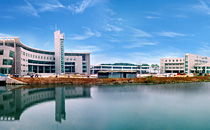
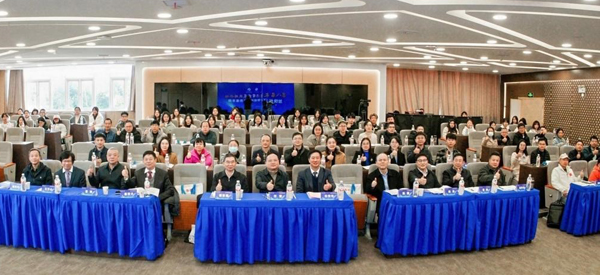
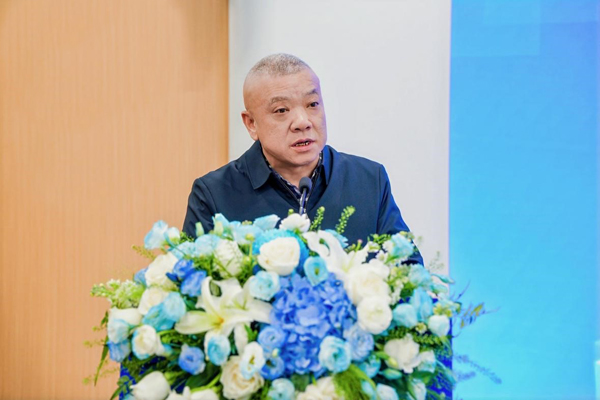

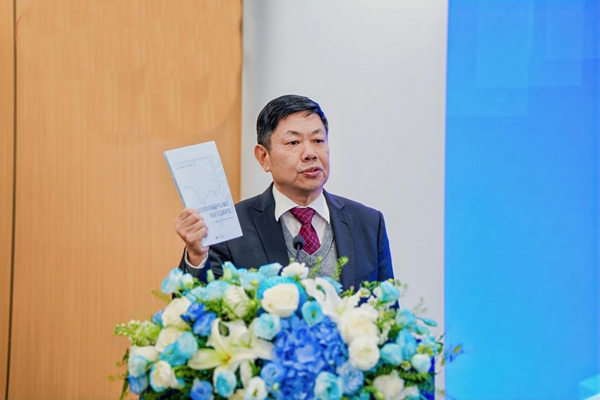
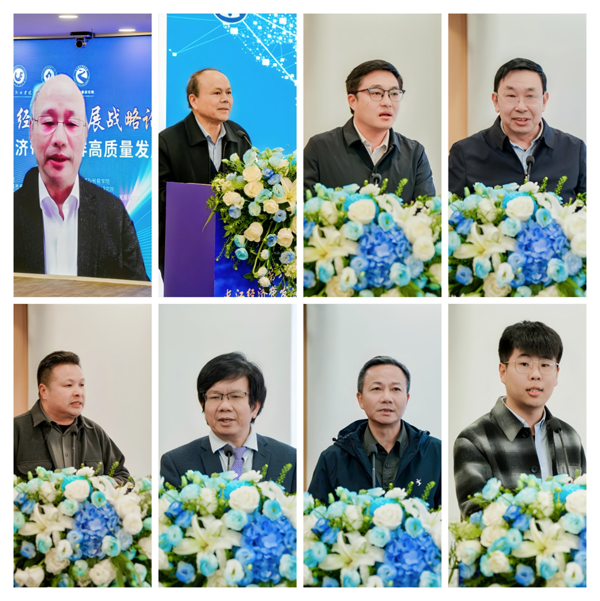
On November 20th, the 8th Yangtze River Economic Belt Development Strategy Forum was held at our university. Centered on the core theme of Accelerating High-Quality Development of Urban Clusters in the Yangtze River Economic Belt, the forum focused on key issues such as synergy within the Yangtze River Midstream urban agglomeration, integration of science and industry, and watershed governance. Renowned scholars from across the nation attended, discussing high-quality development for the Yangtze River Economic Belt.
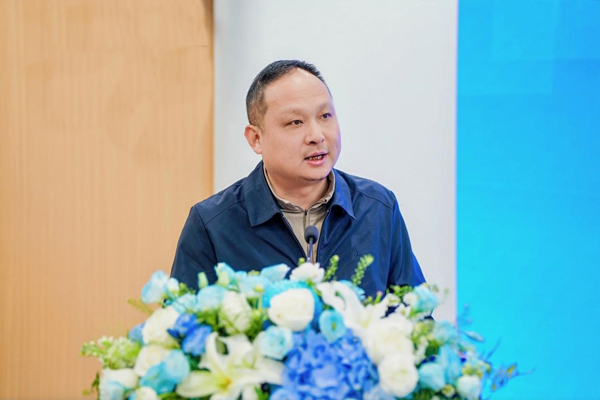
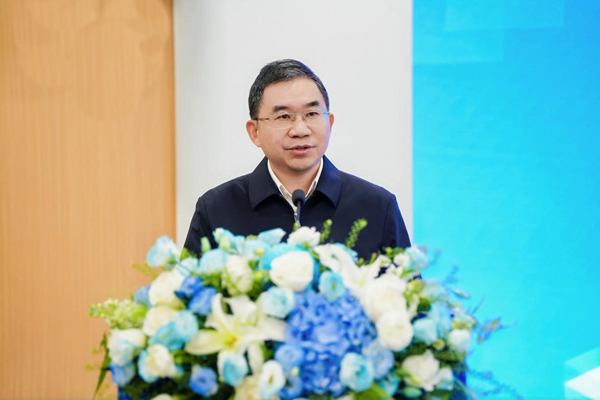
The opening ceremony was presided over by Xu Chuanhua, a member of the University's Party Standing Committee. Fu Hong, Deputy Party Secretary and Vice President of the university, delivered the welcome address, introducing the institution's practical achievements in serving national strategies and regional development, based on its New Finance and Economics reform. Since establishing the Yangtze River Economic Belt Research Institute in 2018, the university has consistently focused on the development of the Yangtze River Economic Belt, taking the lead in forming the 'Yangtze River Economic Belt High-Quality Development Think Tank Alliance' and hosting the strategy forum for seven consecutive years, providing solid intellectual support for major regional decision-making. Cui Hongguo, Deputy Director of the Hubei Provincial Party Committee Policy Research Office and Director of the Hubei Provincial Strategic Planning Center, stated in his address that Hubei, as the province with the longest stretch of the Yangtze's main course, has achieved significant results in ecological protection and industrial upgrading in recent years, guided by the principle of prioritizing ecological protection and pursuing green development. He expressed hope that the forum would serve as an opportunity to establish closer and more practical cooperative relationships, applying outstanding research outcomes to Hubei's practices. Lei Yu, Deputy Editor-in-Chief of Changjiang Net, shared practical experiences of media supporting the development of the Yangtze River Economic Belt in his address. Changjiang Net has participated in forum reporting for many years, launching a 'Yangtze River Economic Belt High-Quality Development' column, and will further deepen the integration of 'media + think tanks' to provide data support and public opinion guidance for regional development.
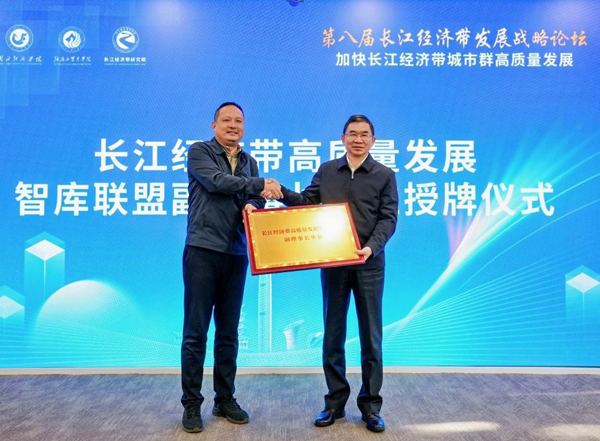
Fu Hong presented the plaque for Vice Chair Unit of the Yangtze River Economic Belt High-Quality Development Think Tank Alliance to the Hubei Provincial Strategic Planning Center. Qin Zunwen, Dean of the Yangtze River Economic Belt Research Institute, released the research report titled Layout and Development of Sub-Provincial Central Cities in the Yangtze River Economic Belt. The report systematically reviews the development status of sub-provincial central cities in the Yangtze River Economic Belt, offering theoretical reference for their practical advancement.
In the keynote speech session, 11 domestic and international experts delivered in-depth presentations on the theme High-Quality Development of Urban Clusters in the Yangtze River Economic Belt, covering dimensions such as strategic positioning, practical pathways, and experience sharing. Yang Kaizhong, Academician of the International Eurasian Academy of Sciences and Member of the Chinese Academy of Social Sciences (CASS), presented on New Quality Productive Forces: The New Round of Productivity Paradigm Revolution Reshaping the Future, proposing that new quality productive forces represent a revolution in the productivity paradigm, involving coordinated transformations across technology, value, and institutions.
Chen Yao, Researcher at the CASS Institute of Industrial Economics and Vice President of the China Regional Economics Association, analyzed the strategic significance and practical pathways for accelerating the development of the Yangtze River Midstream urban agglomeration from a national strategic perspective.
Chen Tao, Deputy Director of the Hubei Provincial Strategic Planning Center, delivered a report titled Planning According to the Situation: Reflections on Regional Synergy of the 'Han-Xiang-Yi' Golden Triangle, proposing to build a pattern of vertex-driven, corridor expansion, and multi-point support in response to current issues within the Golden Triangle. The team of Li Lin, Counselor to the Hunan Provincial Government and Professor at Hunan University, proposed a five-pronged strategy: building a concentration zone for basic research, strengthening the dominant role of enterprises, smoothing channels for translating achievements, gathering the live water of sci-tech finance, and building a talent reservoir.
Zeng Gang, Lifetime Professor at East China Normal University and expert from the Yangtze River Basin Development Research Institute, presented on International Experience in Watershed Economy and Implications for Yangtze Development, systematically analyzing development models of the Rhine River and the North American Great Lakes Basin. Combining these with the reality of the Yangtze River Economic Belt, Zeng proposed a three-chain integration development pathway. Wu Chuanqing, Professor at Wuhan University and Director of the Regional Economic Research Center, shared mature experiences from the construction of the Yangtze River Delta Innovation Community in his report.
Wang Wanshan, Vice President of Yuzhang Normal University, outlined diverse development paths for future cities globally and in China, highlighting green, intelligent, and collaborative as core keywords in his report Multiple Development Paths for Future Cities. Yang Fenghua, Vice President of the Jiangsu Yangtze River Economic Belt Research Institute, shared practical pathways for cross-regional coordinated development, using the Yangtze River (Yangzi) Urban Agglomeration as an example in his report.
The forum also concurrently held an International Forum and the Council Meeting of the Yangtze River Economic Belt High-Quality Development Think Tank Alliance. At the International Forum, Professor Tan Hui from Royal Holloway, University of London, introduced the tripartite Government-Enterprise-NGO collaboration model in Rhine River governance. Jiang Yong, an expert from the UNESCO-IHE Institute for Water Education, shared experiences in building a global water education system, suggesting the Yangtze River Economic Belt establish a Watershed University Alliance to cultivate interdisciplinary water management talent. Watt Botkosal, Deputy Secretary-General of the Cambodian National Mekong Committee, expressed hope for strengthened exchanges with the Yangtze River Economic Belt in areas like ecological monitoring and shipping cooperation, promoting synergistic development between the Mekong and Yangtze River basins.
The forum was jointly hosted by our university, the Yangtze River Economic Belt High-Quality Development Think Tank Alliance, the Hubei Provincial Strategic Planning Center, and Changjiang Net, and organized by the School of Economics and Trade, the Yangtze River Economic Belt Research Institute, and the Hubei New Quality Productive Forces Industrial Development Research Institute.